Driver takes Tesla to court over sketchy, warranty-voiding odometer algorithm claims
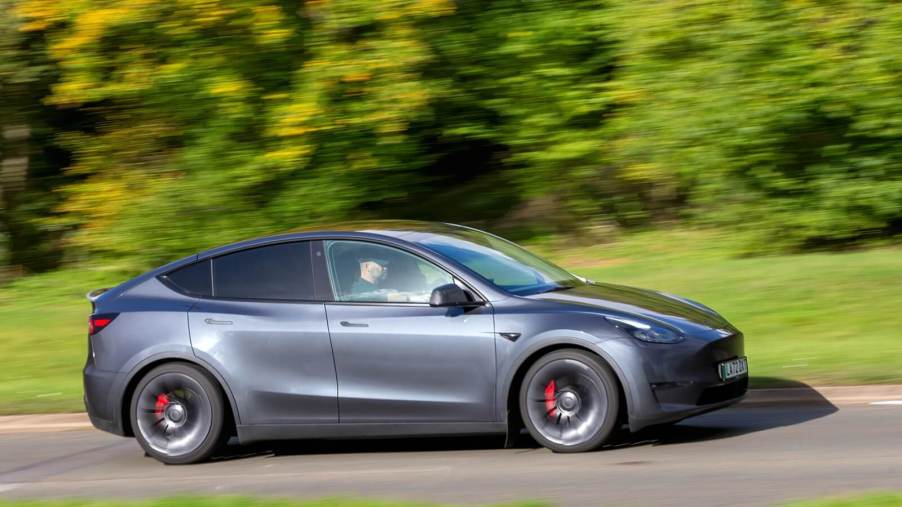
Tesla has had a lot of bad press lately. Cybertruck recalls, sales slumps, and tariff-related follies are common headlines. In one of the latest Tesla developments, a driver started a lawsuit against Tesla, claiming his warranty expired early due to his Model Y’s less-than-trustworthy odometer.
Lawsuit: Tesla odometers may ‘indicate greater distances than what they actually travel’ to sidestep warranty obligations
J’accuse, Tesla! At least, that’s what Tesla owner Nyree Hinton is saying after launching a lawsuit against the brand. According to the specifics of the suit. Hinton purchased a Tesla Model Y with fewer than 37,000 miles on the clock. Of course, it’s not a clock; it’s Tesla’s odometer function on the vehicle’s touchscreen nerve center.
Therein lies the controversy. As the lawsuit says, Tesla vehicles don’t rely on more the more traditional “mechanical or electronic to measure distance.” Hinton’s accusations include the serious claim that Tesla uses “predictive algorithms, energy consumption metrics, and driver behavior multipliers that manipulate and misrepresent the actual mileage traveled by Tesla Vehicles.”
So, why? What could Tesla possibly have to gain? Well, Hinton’s legal representation, Singleton Schreiber, suggests that the odometer skews mileage records to push Tesla vehicles out of the basic warranty period. While the industry standard is typically three years or 36,000 miles of coverage, Tesla’s basic, bumper-to-bumper warranty covers an EV like Hinton’s Model Y for four years or 50,000 miles.
Hinton claims the vehicle’s odometer displayed more than 50,000 miles within six months. Over 13,000 miles in six months? That’s nearly twice as much as the average American, but not inconceivable. But the math didn’t quite add up. According to Hinton, his last three vehicles added an average of closer to 6,086 miles doing the same commute over six months.
Interesting, yes. But again, not outside of the realm of possibility. After all, maybe Hinton just loved driving his Tesla. The next year, however, Hinton’s commute got longer. Despite the added distance, his Model Y’s mileage tracker added around 800 fewer miles per month than it did during the shorter commutes.
As a result, Hinton asserts that his Tesla showed accelerated mileage accumulation during the basic warranty period. He also claims that, despite a longer average drive, the Model Y’s mileage counter slowed down after it exceeded the distance limit for the warranty. Oh, the drama.