Experienced Subaru tech says AWD is great—but two items are more important for snowy driving
If you live in an area that sees snow in the wintertime, you’ve likely been pushed to buy a car that has an all-wheel drive or four-wheel drive. After all, either system is great for maintaining or regaining traction in wet, snowy, or icy conditions.
However, either system won’t save you from driving into a ditch during a snowstorm if you’re missing two things. Dustin Piggott, a Service Manager at Subaru of Bend in Bend, Oregon—a remote mountain town that experiences below-freezing temperatures and several inches of snow annually—is a big fan of all-wheel drive.
It’s a handy system for both experienced and novice wintertime drivers, especially when starting from a stop.
“AWD helps in many ways,” he told The U.S. Sun. “When all four wheels get power, your ability to get the vehicle moving is greatly increased. Most of the new vehicles on the road have a traction control system, and AWD improves this system’s ability to help keep your vehicle from losing control.”
However, AWD isn’t the only box that needs to be checked before snow arrives
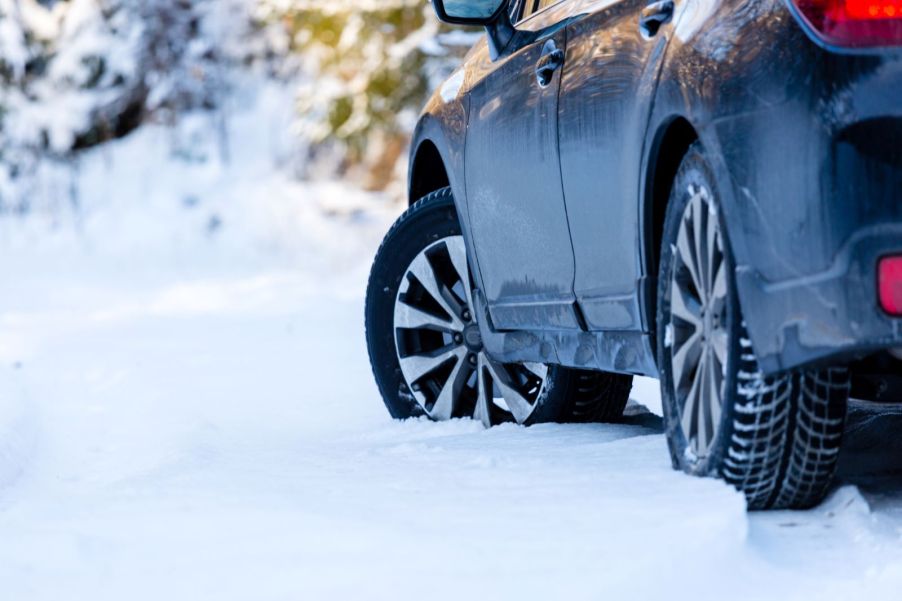
Regardless of whether or not your car is all-wheel drive, four-wheel drive, rear or front-wheel drive, tires are the second most important safety feature you can have on your car. Even if you have all-wheel drive, using the wrong tires or poor-quality tires can have you going sideways.
“The one thing that is commonly misunderstood is that AWD does not help you stop in slippery conditions,” he said. “Traction or dedicated winter tires and driving experience in slippery conditions are the only things that can aid you in stopping.”
Every winter, he says he books appointments with customers who have slid into a curb while making a turn or trying to stop in the snow—even with all-wheel drive. Many times, he says, they come with improper tires for the season. Otherwise, they may have been spared.
“These customers may have been able to avoid the collision if they had traction tires installed on their vehicles,” he said.
Did you catch the second most important safety ingredient?
In case you missed it, Piggott mentioned a game-changing aspect of winter driving. And unfortunately, it can’t be bought from a store: driving experience.
However, he does have a solution for that: an empty, snow-laden parking lot. There, he says you can take your car to its limits to better understand how to retake control if (and when) you lose it.
“Take your vehicle to a large open lot and test your skills,” explained Piggott. “Knowing how your car reacts to turning sharply and trying to stop when it is slippery is something that can help build confidence and skill when driving in winter conditions.”
Those two things—excellent tires and experience—can mean the difference between an incident-free winter and an expensive trip to a repair shop. So, before you pay extra for all-wheel drive or four-wheel drive, understand that tires and confidence in your abilities will be your saving graces.
Either system is only as good as the tires on your car and the driver behind the wheel.