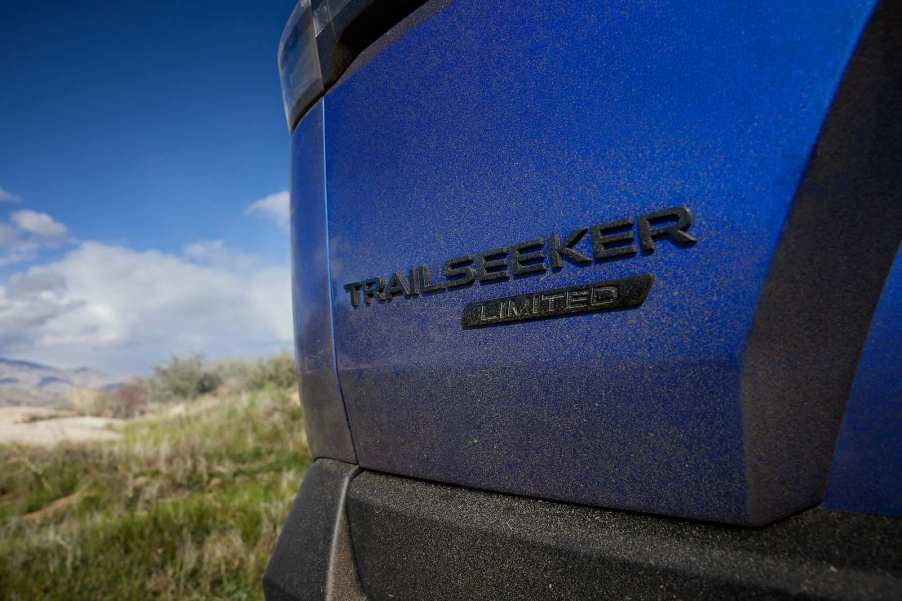
This year, Subaru stole Toyota’s crown as Consumer Reports’ #1 brand for predicted reliability. It’s celebrating with an electric crossover which is exactly the wagon America needs: The Subaru Trailseeker.
The Trailseeker isn’t the first electric Subaru. That distinction goes to the 2022 Solterra. The Solterra was a four-door crossover on the Toyota bZ4X chassis. With its sloped liftgate it only offered 23.8 cubic feet of cargo room behind the third row. The longer, higher Trailseeker fixes that.
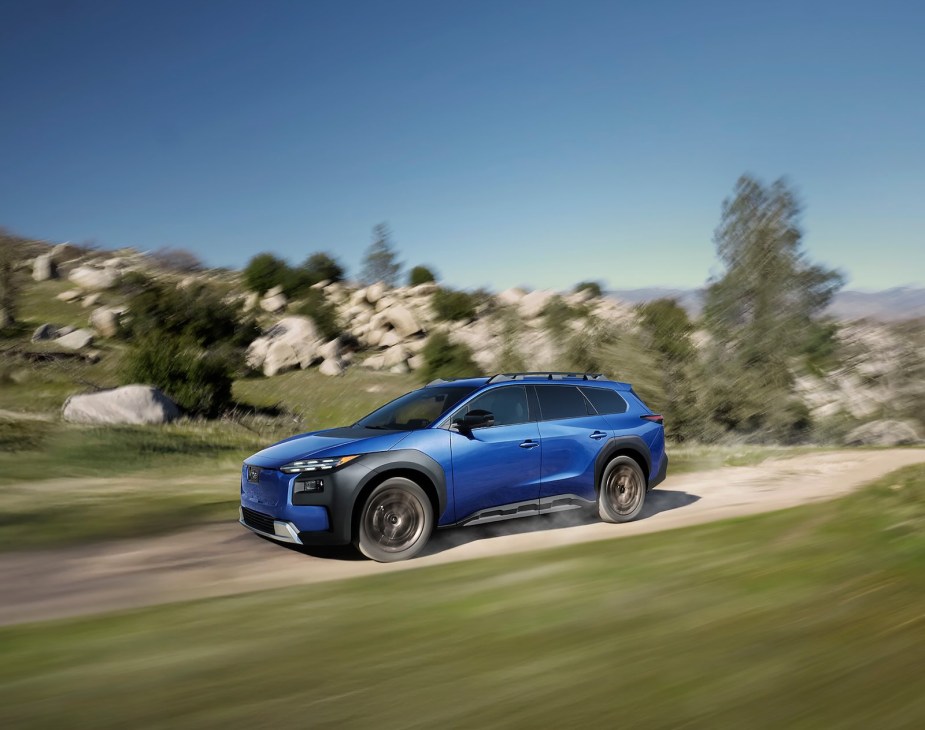
The 2026 Subaru Trailseeker has similar dimension to the Outback. It boasts 8.3 inches of ground clearance and driving modes for Snow/Dirt and Deep Snow/Mud. It even gets hill descent control.
The new EV features a NACS-style charging port and so it should be able to hook up to Tesla’s extensive Supercharger network. With its 375 horsepower AWD powertrain it can rocket to 60 horsepower in 4.3 seconds. That’s one fast ‘ru!
More intriguing to the average Subaru fan is its 3,500-pound towing capacity. But towing will significantly cut into its 75 kWh battery’s range. Subaru is estimating a range over 260 miles. We’ll just have to wait and see what it can do in the real world. But because of range, I expect a long, low wagon is the EV shape of the future.
The only real Achilles Heel of the Subaru Trailseeker will be its 150 kW charging speed. Competitors, such as the Hyundai Ioniq 5 already offer 350 kW. That means the Hyundai next to you will be charged and outta there by 18 minutes while the Trailseeker will take closer to 35 minutes to top off.
Will the Subaru Trailseeker be reliable?
As I mentioned, Subaru now enjoys Consumer Reports’ highest predicted reliability rating. Designing its Trailseeker in collaboration with Toyota bodes for excellent reliability. Obviously, brand new models may suffer unexpected issues. But once the Trailseeker is dialed in, it may be Subaru’s most reliable model.
A German study of vehicles built in the past five years found EVs break down half as often as internal combustion cars. Why? fewer moving parts. They also require less maintenance. Combined with not having to buy gasoline, they can be much less expensive per mile driven.